
Empowering Children with Autism using the QSB Wave
Empowering Children with autism

Empowering Children with autism with our vibrational healing tool, the QSB Wave, was an idea born of a webinar about helping children to heal. It led to a global trial with autistic children and some amazing results – some of which are shared on this page.
This page represents the next stage of this journey – making this technology available to as many people as possible, with a primary focus on empowering children with autism and improving the lives and general wellbeing of their families – both directly (by treating them with the QSB Wave as well) and indirectly (by improving relationships with these special children).
What Is the QSB Wave?
Inspired by Dr Peter Gariaev’s Wave Genetics — bringing balance, communication, and calm through gentle resonance therapy.
The QSB Wave is a breakthrough in resonance and frequency technology developed by Life Energy Solutions.
Rooted in decades of work on Wave Genetics and biophotonic research, this new approach focuses on the informational blueprint of the human body — rather than chemistry alone.
Used remotely and non‑invasively, the QSB Wave emits precisely tuned custom scalar frequencies specific to the person receiving treatment that restore harmony and calm to the nervous system.
Families worldwide that took part in our three month trial in late 2025 reported extraordinary outcomes: calmer behavior, better sleep, and improved emotional and social connection.
Above all, this technology is empowering children with autism to connect more deeply with themselves and the world around them.
The Science: Wave Genetics and Quantum Information
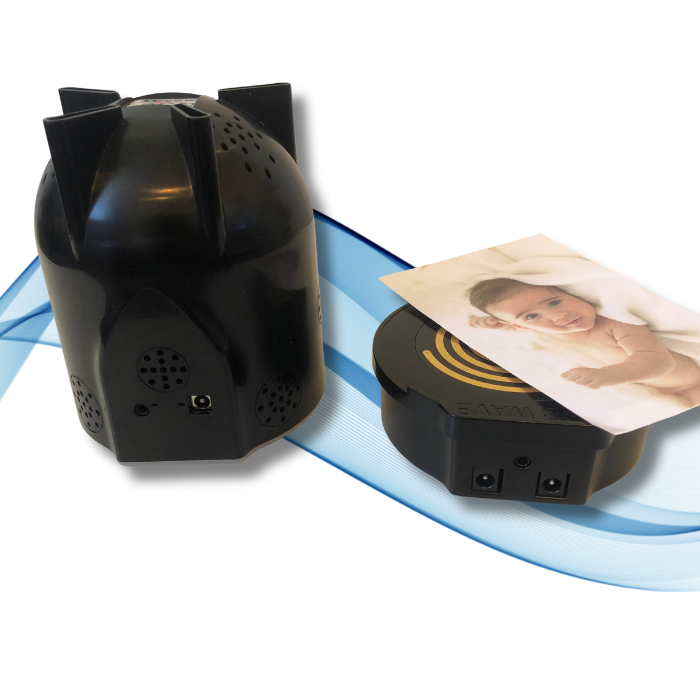 The QSB Wave builds upon the pioneering discoveries of Dr Peter Gariaev, the Russian biologist known as the founder of Wave Genetics.
His research revealed that our DNA is not just a biochemical molecule — it also acts as a quantum antenna, transmitting and receiving information through light, sound, and scalar waves.
This means that every cell in the body communicates through an invisible field of energy and information.
Dr Gariaev’s experiments showed that by directing specific frequencies — light encoded with healthy genetic patterns — it was possible to influence biological development and cellular behavior.
In one key demonstration, a beam of light carrying “salamander DNA information” altered frog embryos, proving that bio‑informational energy fields control growth and regeneration.
Drawing inspiration from these discoveries, the QSB Wave transmits gentle scalar frequencies, including the renowned 528 Hz “DNA repair” frequency designed to reinforce the body’s own energetic blueprint and , most importantly, specific information extracted from the subjects baby photo (as per Dr. Gariaev’s technology).
This allows the body’s natural intelligence to re‑align itself — supporting emotional regulation, neurological balance, and wellbeing.
Remote treatments

Perhaps one of the most exciting elements of this technology but conversely one of the hardest for the layman to get their head around is that the equipment and the person receiving treatment do not need to be in the same building, nor even the same country.
The science behind this is what Einstein called “spooky action at a distance” or quantum entanglement. Quantum entanglement is a way satellites can communicate with ground stations. For healing it relies on an entangled connection with the subject using the subjects energetic blueprint captured invisibly in a photograph.
In this way we can use a single QSB Wave to remotely treat whole families in multiple locations simultaneously. Hard to believe, maybe, but not too hard to prove based on the results from our trial, which has given us the confidence to put together our own unique remote treatment program (with an exciting and very unique twist -coming very soon)
How QSB Wave Resonance Therapy Supports Autism
 For many children on the autism spectrum, heightened sensitivity and overstimulation can lead to anxiety, sleep disruption, and social withdrawal.
The QSB Wave helps by restoring coherence within the nervous system, providing a harmonizing influence that reduces energetic “noise.”
- Greater calm and balance — children experience fewer meltdowns and smoother transitions.
- Improved communication — language, responsiveness, and eye contact gradually increase.
- Restful sleep — many parents note deeper, longer, and more consistent sleep cycles.
- Sustained focus — children show new interest in learning, play, and daily interaction.
Unlike conventional therapies, the QSB Wave doesn’t impose change — it provides the environment for it.
By gently restoring bio‑informational order, the body and mind can naturally reorganize toward stability and growth.
This is the essence of empowering children with autism.
Families Share Their Experience

“Our son is calmer, sleeping better, and starting to express himself again.”
“Her social awareness has blossomed — we’re finally sharing laughter every day.”
“It’s been the most hopeful change we’ve seen in years — peaceful, natural, and lasting.”
“My nonverbal autistic son, who is 5 1/2 years old, had some really amazing results while on the QSB wave trial. We really felt like and noticed that he seemed to be more in our world than in his own. He started making more eye contact, giving high-fives, was engaging in back and forth play with a ball, he learned how to dribble the ball (a new favorite skill of his), he started peeing on the potty for the first time ever. Our biggest and most heartwarming win was that he started giving us kisses for the first time in his life!! We are so grateful for our time on the QSB wave trial and would highly recommend the experience to other autistic children and their families.” Jenna A Fl USA
“First I just want to thank you for allowing William and I to be a part of the study. I can say it has impacted him in ways that are hard to describe but to me it’s easy to see. It is more gradual and like in the moment I think to myself wow he’s never done that before or i didn’t know he was capable of that. It also is just like he’s in a more positive calmer state all the time. So just like many of those types of feelings for the past three months. We don’t have the means to purchase a qsb wave. If there was a way to somehow continue with the remote healing I would love to hear more. Thank you again for your kindness and generosity. Looking forward to hearing from you soon” Angie C USA
Mae’s Story – Not part of the trial but treated by a practitioner independently with the QSB Wave
Trial results by child
 For families who participated in the QSB Wave three‑month autism trial, the results were life‑changing.
Across every household, parents noticed the same remarkable shift — their children seemed more present, calm, and joyful.
Over the 3-month trial, caregivers consistently reported meaningful improvements in emotional regulation, communication, sleep, toileting, social engagement, and overall calmness
Participants ranged in age from5 to 22 years, with a mix of verbal and non-verbal children and young adults. Almost all feedback reflected increased self-awareness, connection, and emotional stability.
Summaries by Participant
Warren (Age 5)
– Major milestone: began using the toilet for both urination and bowel movements.
– Communicated feelings spontaneously (“Mommy, I’m feeling a little nervous”).
– Managed transitions well (vacation and starting kindergarten).
– Still learning independence with wiping.
→ Key Note: Emotional growth and toileting independence are strong markers of neurological progress and self-regulation.
Tobias (Age 11)
– Regular bowel movements and improved toileting habits (self-prompting).
– Weaned off medication (Rubifen) while maintaining good school engagement.
– More affectionate (giving hugs, gentle behavior).
– Sleep improved; sings to himself, content, cheerful.
Key Note: Reduced medication dependence with concurrent behavioral and emotional improvements.
Thomas (Age 14)
– 2–3 nights seizure-free followed by improved focus, mood, and communication.
– Improved tolerance for noise and group settings.
– Significant reduction in frustration and violent behavior.
– Sleep and mood much more stable.
→ Key Note Lower seizure frequency coincided with increased emotional regulation and academic focus.
Riley (Age 5)
– Initiated peer play for the first time; improved social interest.
– Major progress in communication (more babbling, AAC device use).
– Slept better and began peeing in the potty.
– New affection behaviors (giving high-fives, kisses, joint play).
→ Key Note: Breakthroughs in social engagement and expressive communication—first-time physical connection behaviors reported.
William (Age 16)
– Increased interaction and play with younger sister.
– Greater flexibility during travel and transitions.
– More patience (able to queue at a movie event independently).
– Noted emotional calm during challenges (piano lessons).
→ Key Note: Marked social integration, patience, and reduced reactivity—signs of deepened emotional maturity.
Liam (Age 6)
– Improved communication and problem-solving (“my legs are not working” after seizure).
– Enhanced play and concentration (steering games, Scrabble).
– Calmer mood and increased participation despite illness.
→ Key Note: Cognitive clarity and expressive language gains even through medical challenges.
Isabella (Age 10)
– Better focus during meals and play (increased attention span).
– Reduced self-injuring behaviors and meltdowns; improved social tolerance.
– First voluntary cuddling episode (35 min) and increased eye contact.
– Teacher feedback: sat for 20 minutes at school for the first time ever.
→ Key Note: Huge strides in engagement, affection, and regulation—reduction of defensive behaviors.
Kayden (Age 7)
– Consistently sleeping well—through the night.
– Increased eye contact and joyful mood.
– Strong spelling and cognitive engagement.
– Parents noticed bursts of happy energy post-sessions.
→ Key Note: Heightened expressiveness, happiness, and cognitive connection (improved spelling and engagement).
Ryan N (Age 20)
– Improved use of right (CP-affected) hand; self-feeding and mobility confidence.
– Growing social motivation—initiates conversations and peer connections.
– Emotionally grounded and expressive (“super happy and social”).
– Longer physical standing endurance.
→ Key Note: Improved motor control, communication, and joyful self-expression in young adults.
James (Age 8)
– Increased willingness to socialize and host/play with friends.
– More cooperative during public outings.
– Greater imaginative play and use of manners (“please” and “thank you”).
– Able to self-soothe and verbally apologize.
→ Key Note: Positive social-emotional development with increased empathy and adaptability.
Courtney (Age 16)
– Advocated for self during meetings; improved independence in hygiene.
– Better sleep, no bedwetting, positive school performance.
→ Key Note: Growth in self-confidence, independence, and executive function.
Connor (Age 14)
– Brighter demeanor, increased motivation, and willingness to try activities despite OCD.
→ Key Note: Sharper positivity and internal motivation replacing avoidance behaviors.
Declan (Age 22)
– More regulated nervous system during therapy (OT could work deeper, faster).
– Calm response to sensory triggers (e.g., baby crying).
– Slight improvement in communication of needs.
→ Key Note:Measurable physiological calm and faster recovery from dysregulation.
George (Age 9)
– More calm, affectionate, and socially connected.
– Trying new foods, proactive behaviors, and flexible emotional responses.
→ Key Note: Lower anxiety, higher adaptability, and affectionate sibling interaction.
Conclusion
Across a broad spectrum of needs and ages, families reported steady, natural, and often emotionally moving progress in their children’s ability to:
– Regulate emotions
– Communicate with intention
– Sleep and rest effectively
– Engage socially and show affection
The feedback demonstrates the potential of QSB Wave’s harmonic resonance therapy to support neurological balance and emotional connectivity in children and young adults with autism and related conditions — improving not just individual behaviors but family harmony as a whole.
Begin Empowering Your Child’s Future

Backed by emerging science and inspired by the remarkable research of Dr Peter Gariaev,
it reflects a future where energy, emotion, and biology work in harmony.
To understand more about the vibrational healing technology of the QSB Wave, go here
If you want to read the full feedback we received you can see this here: Empowering Children with Autism – Trial Feedback
Empowering Children with Autism
-

QSB Wave
Price range: $699.99 through $1,999.98 Select options This product has multiple variants. The options may be chosen on the product page -
QSB Quantum Scalar Box
$1,299.99 Add to cart