
Meeting Your Shadow Self: Carl Jung, Emotional Freedom, and the Transformative Power of Self-Awareness
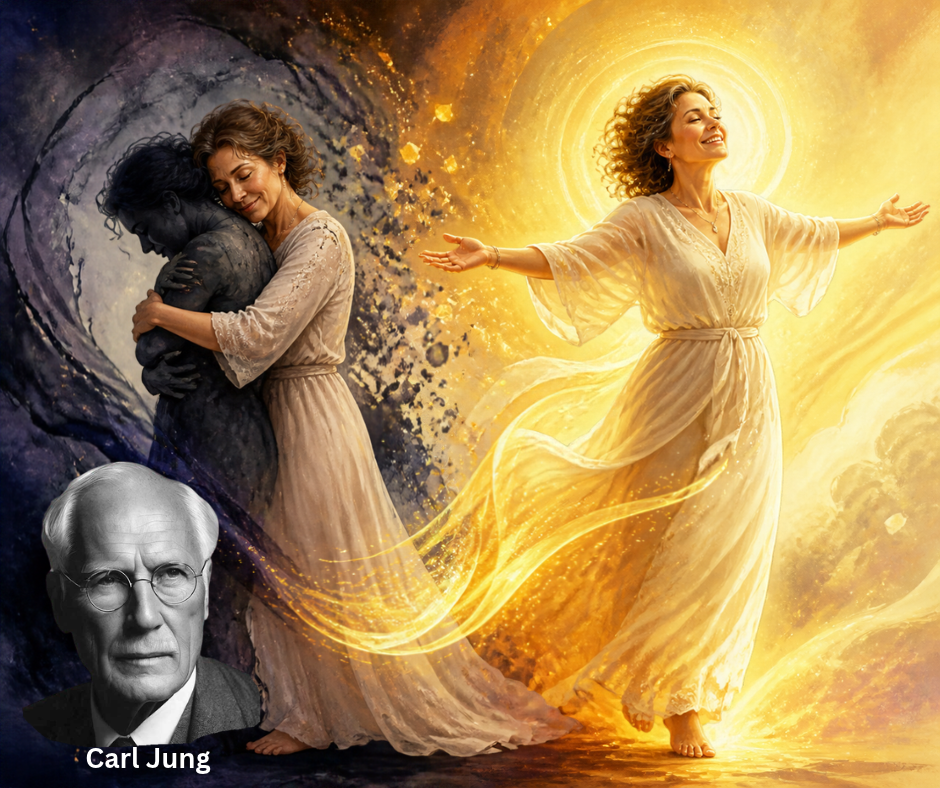
Most people spend a lifetime trying to avoid the very parts of themselves that hold the key to their growth. We suppress uncomfortable emotions, deny undesirable traits, and bury painful experiences deep beneath the surface of conscious awareness. Yet according to Swiss psychiatrist Carl Jung, these hidden aspects of ourselves do not simply disappear. Instead, they form what he called the shadow self.
The journey of personal transformation often begins not by striving to become someone new, but by embracing the parts of ourselves we’ve spent years trying to hide.
What Is the Shadow Self?
Carl Jung described the shadow as the unconscious part of the personality that contains aspects of ourselves we reject, suppress, or deny.
These traits are not necessarily negative. The shadow can contain:
- Repressed anger
- Fear and insecurity
- Shame and guilt
- Unfulfilled desires
- Hidden talents
- Creativity
- Personal power
- Authentic emotions we were taught were unacceptable
As children, we learn which behaviours are approved and which are not. To gain love, acceptance, and belonging, we often push unwanted characteristics into the unconscious mind. Over time, these rejected aspects become part of the shadow.
“One does not become enlightened by imagining figures of light, but by making the darkness conscious.”
The challenge is that what remains unconscious often continues to influence our lives. It may show up as:
- Emotional triggers
- Self-sabotaging behaviours
- Recurring relationship patterns
- Unexplained anxiety or tension
- Persistent feelings of being stuck
- Judgments and projections onto others
The very qualities we dislike in others are often clues pointing toward aspects of our own shadow waiting to be acknowledged.
Why Shadow Work Matters
Shadow work is the process of bringing unconscious material into conscious awareness.
Its purpose is not to eliminate the shadow but to integrate it.
When we ignore the shadow, it tends to control us from behind the scenes. We react automatically rather than consciously choosing our responses. Emotional wounds remain unresolved and continue shaping our decisions.
As shadow integration progresses, people often experience:
- Greater emotional balance
- Improved relationships
- Increased self-awareness
- Enhanced authenticity
- Stronger intuition
- Reduced emotional reactivity
- Greater inner peace
Rather than splitting ourselves into “good” and “bad” parts, shadow work teaches us to become whole.
The Process of Facing the Shadow
Shadow work can be challenging because it asks us to look honestly at ourselves. However, there are several practical approaches that can help.
1. Observe Emotional Triggers
Strong emotional reactions are often signposts pointing toward shadow material.
Ask yourself:
- Why does this person trigger me so strongly?
- What emotion am I trying to avoid?
- What belief is being challenged?
Sometimes the greatest insights come from moments of discomfort.
2. Practice Radical Self-Honesty
Shadow work requires courage.
Instead of judging ourselves for our anger, jealousy, fear, or resentment, we can become curious about them.
Questions to reflect on include:
- What am I not admitting to myself?
- What parts of me seek attention?
- What emotions do I suppress most often?
Awareness is the first step toward transformation.
3. Journal and Reflect
Writing creates a bridge between the conscious and unconscious mind.
Regular journaling can reveal patterns, hidden beliefs, and emotional wounds that might otherwise remain unseen.
Many people find that recurring themes emerge over time, offering valuable clues about unresolved shadow aspects.
4. Work with the Body
Emotions are not only psychological experiences. They are also stored and expressed through the body.
Feelings that have not been fully processed can manifest as:
- Chronic tension
- Nervous system dysregulation
- Fatigue
- Stress patterns
- Emotional heaviness
As awareness increases, many people choose practices that support emotional release and energetic balance alongside psychological exploration.
Releasing What Has Been Hidden
An important aspect of shadow work is recognising that becoming aware of an emotion is only part of the journey.
The next step is allowing that energy to move.
Many spiritual and personal development traditions suggest that unresolved experiences can remain encoded within the body’s energetic systems. Whether viewed through a psychological, somatic, or energetic lens, lasting transformation often begins when hidden patterns are brought into awareness and given space to shift.
This is where supportive tools and modalities can play a valuable role.
The Shadow Self as an Energetic Pattern
While Jung approached the shadow primarily through psychology, many modern spiritual traditions view the human being as more than just mind and body. They propose that we are also energetic beings, existing within a dynamic biofield that stores information, experiences, memories, and behavioural patterns.
From this perspective, the shadow can be understood not only as unconscious psychological content, but also as energetic patterns that remain hidden within our field of awareness.
These patterns may have been created through life experiences, conditioning, emotional events, limiting beliefs, or aspects of ourselves we have rejected. Over time they become part of the energetic architecture through which we perceive and interact with the world.
The challenge is that anything concealed within the shadow seeks expression. Just as buried psychological material can influence our thoughts and behaviours from beneath conscious awareness, energetic patterns within the biofield may continue operating in the background until they are brought into consciousness.
Shadow work, therefore, becomes a process of uncovering, observing, and transforming these hidden patterns.
The QSB and the Process of Energetic Change
One of the reasons shadow work can feel challenging is that growth requires movement. Long-established patterns, whether psychological or energetic, tend to resist change because they have become part of our familiar way of being.
This is where the QSB Quantum Scalar Box offers an interesting perspective.
The QSB is designed to introduce coherent scalar energy into an environment. Many users describe the experience as one that “shakes things up,” not in a disruptive sense, but in a way that encourages movement within stagnant energetic structures.
When viewed through the lens of shadow work, this can be thought of as creating conditions in which previously hidden patterns become easier to recognise.
As energy moves, awareness often follows.
Patterns that have operated unconsciously may become more visible. Long-held assumptions may be questioned. Old reactions may begin to reveal themselves. Situations that were once ignored may suddenly demand attention.
In this sense, the QSB is not doing the shadow work for you.
Rather, it may help create an energetic environment in which unconscious patterns become more apparent, allowing greater opportunities for observation, awareness, and personal transformation.
Many people begin shadow work searching for light, only to discover that true transformation starts with what has been hidden. The QSB can be viewed as a tool that supports energetic movement and change, helping to stir the waters so that what lies beneath the surface has the opportunity to be seen.
After all, the shadow can only be integrated once it becomes visible.
Bringing Light to the Darkness
Carl Jung believed that true growth comes from embracing the entirety of who we are.
The shadow is not an enemy. It is the collection of forgotten, rejected, and misunderstood aspects of ourselves waiting to be recognised and integrated.
Every emotional trigger, every recurring pattern, and every uncomfortable feeling may contain valuable information pointing toward greater self-awareness and personal freedom.
As hidden patterns surface and are acknowledged, we create the opportunity for transformation. Through practices such as reflection, mindfulness, self-inquiry, and supportive energetic tools like the QSB Quantum Scalar Box, we can take meaningful steps toward becoming more whole.
The goal is not perfection.
The goal is integration.
And as Jung taught, it is often within the darkness we discover the greatest source of our light.
Explore the QSB Quantum Scalar Box
If you’re ready to support your journey of self-discovery, energetic awareness, and personal transformation, learn more about the QSB Quantum Scalar Box here:
-
Sale!

Christmas QSB and QSB Wave Offer
Original price was: 2,236.00$.1,677.00$Current price is: 1,677.00$. Add to cart -
Sale!
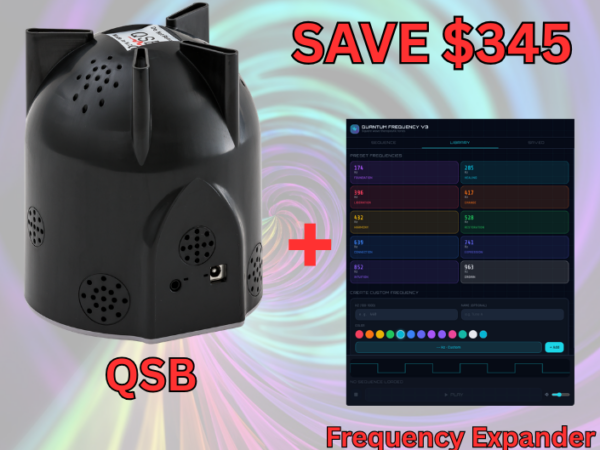
Christmas QSB Offer
Original price was: 1,378.99$.1,033.99$Current price is: 1,033.99$. Add to cart -

QSB Wave
Price range: 699.99$ through 1,999.98$ Select options This product has multiple variants. The options may be chosen on the product page -

Quantum Frequency Expander
79.00$ Add to cart -
QSB Quantum Scalar Box
1,299.99$ Add to cart