
EMF and depression – What the Science Is Now Telling Us
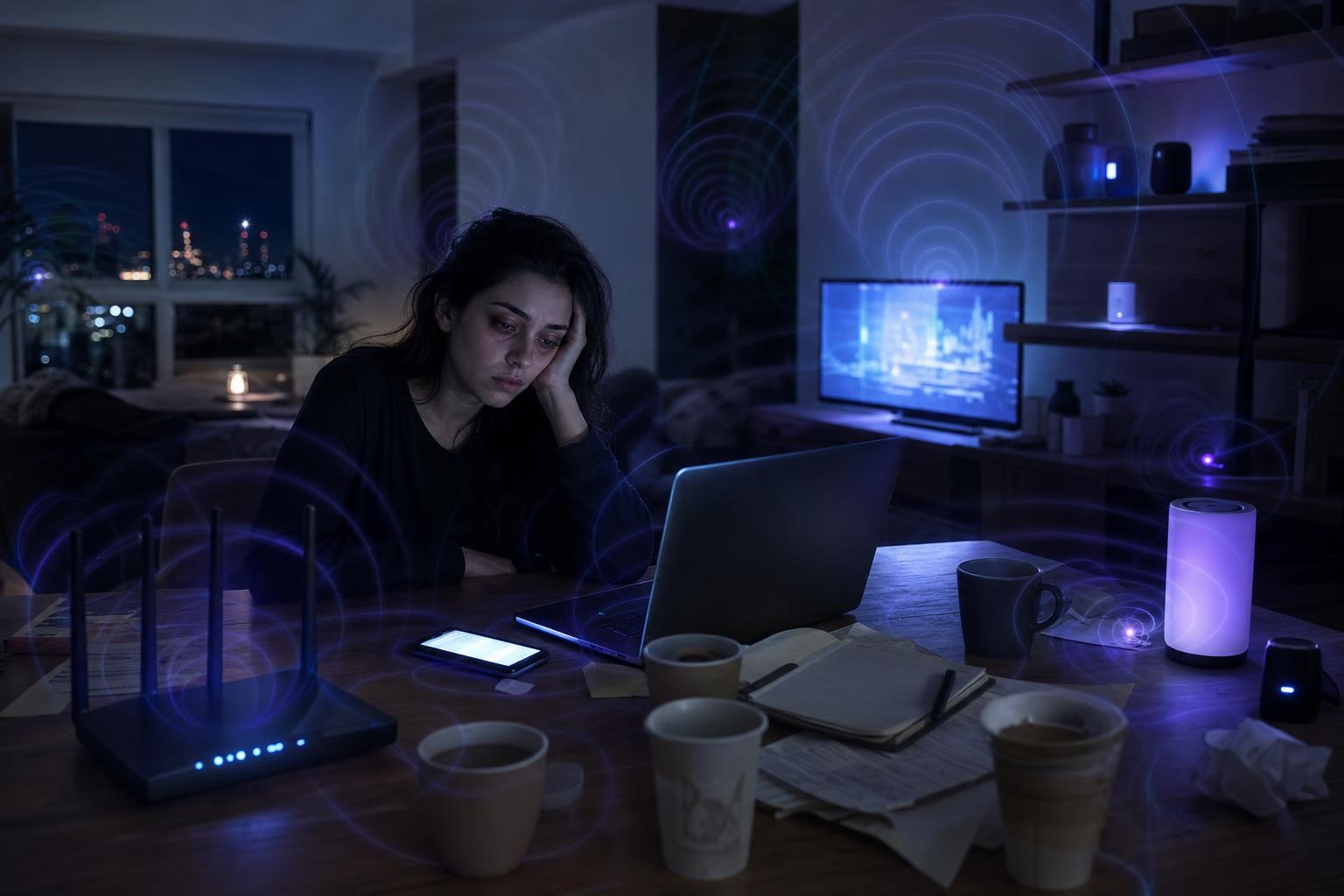
EMF and Depression
You’ve addressed the obvious suspects — poor diet, lack of exercise, chronic stress. Yet the low mood, broken sleep, and persistent brain fog just won’t lift. What if the invisible electromagnetic fields (EMFs) radiating from the devices you use every single day are quietly undermining your mental health?
This isn’t fringe theory. A growing body of peer-reviewed research is drawing a direct line between chronic EMF exposure and depression, anxiety, insomnia, and cognitive decline — and the evidence is compelling enough that health practitioners are now being urged to factor EMF exposure into mental health assessments.
What Are EMFs — and Why Should You Care?
Electromagnetic fields are areas of energy that surround electrical devices and wireless transmission systems. Some EMFs occur naturally — the earth’s own magnetic field, for instance — but the man-made variety is a different matter entirely. According to the National Institute of Environmental Health Sciences, man-made EMFs fall into two broad categories:
- Low-frequency (non-ionizing) EMFs — emitted by smartphones, Wi-Fi routers, smart meters, Bluetooth devices, computers, microwave ovens, and power lines.
- High-frequency (ionizing) EMFs — including X-rays, gamma rays, and UV radiation, which carry enough energy to damage DNA directly.
Most of our daily exposure comes from the first category — low-frequency EMFs. And while the effects are subtler and slower to manifest, that doesn’t make them less serious. In fact, the International Agency for Research on Cancer (IARC) has classified low-frequency EMF radiation as a Class 2B possible carcinogen. The question isn’t whether these fields affect our biology — it’s how much.
The EMF–Depression Connection: What Research Reveals
Here’s what makes the EMF and depression link so significant: our bodies run on electricity. The heart, the brain, the nervous system — all of them rely on precisely calibrated electrical signals. When artificial electromagnetic fields interfere with those signals, the downstream effects can be profound.
A key mechanism involves voltage-gated calcium channels (VGCCs) in the brain. A major review published in Pathophysiology identified 26 studies linking microwave-frequency EMF exposure to neuropsychiatric effects, including depression, anxiety, sleep disturbance, and cognitive impairment. The proposed mechanism: EMFs over-activate VGCCs, triggering excessive neurotransmitter release and disrupting neuroendocrine balance — the very systems that regulate mood.
Occupational studies add real-world weight to these findings. Research published in Frontiers in Psychiatry examined workers at an electricity company and found that depression was present in 24.7% of EMF-exposed workers compared to just 3.4% of non-exposed staff. Poor sleep quality was reported by nearly 65% of the exposed group versus 29.5% of controls. A separate PubMed study on power plant workers reached similar conclusions — chronic ELF-EMF exposure was significantly correlated with higher depression scores, worse sleep, and elevated stress and anxiety levels. Notably, the workers with the highest daily exposure fared worst across every mental health measure.
The Melatonin Factor: How EMFs Steal Your Sleep — and Your Mood
One of the most well-documented biological pathways connecting EMF exposure to both insomnia and depression runs through melatonin — the hormone your pineal gland produces at night to regulate sleep cycles. EMF exposure has been shown to suppress melatonin production by interfering with the serotonin-to-melatonin conversion process during the night hours.
This matters enormously for mental health. Melatonin isn’t just a sleep hormone — it’s a potent antioxidant and neuroprotective agent. A 2022 review in PubMed Central confirmed that EMF exposure induces oxidative stress that melatonin normally counters. Suppress melatonin, and you don’t just lose sleep — you lose one of your brain’s key defences against inflammation and neurological damage, both of which are implicated in depression.
The sleep-depression relationship is a well-established vicious cycle: poor sleep worsens depression, and depression worsens sleep. If EMF exposure is degrading sleep quality by disrupting melatonin, it is — by extension — a direct contributor to depressive symptoms.
Reducing Your EMF Exposure: Practical Steps That Make a Difference
The good news is that you have more control over your EMF environment than you might think. Small, consistent changes can meaningfully reduce your daily exposure:
- Create an EMF-free bedroom. Turn off your Wi-Fi router at night. Keep your phone in another room — or at minimum, switch it to aeroplane mode. Sleep is when your body repairs itself; protect that window.
- Go wired where possible. Ethernet connections for your computer, wired keyboards and mice, and wired headphones all reduce your wireless exposure significantly.
- Distance is your friend. The intensity of an EMF drops sharply with distance. Don’t carry your phone in your pocket or rest a laptop directly on your body.
- Ground yourself — literally. Walking barefoot on grass, sand, or soil (known as earthing) has been shown to help neutralise the positive ion charge that builds up from prolonged device use.
- Support your body nutritionally. Antioxidants — vitamins C and E, omega-3 fatty acids — help counter the oxidative stress that EMF exposure generates. A whole-food diet rich in these nutrients is a meaningful line of defence.
- Use EMF protection products designed to harmonise the impact of electromagnetic fields on the body’s own electrical systems.
The Bigger Picture
If you are struggling with persistent depression, anxiety, disrupted sleep, or unexplained fatigue — and conventional approaches aren’t giving you the relief you need — it is worth asking a question that most doctors don’t yet think to ask: What is your daily EMF exposure like? The answer might be more relevant than you’d expect.
The evidence is there. The question is whether we choose to act on it.
Alex had asked for a refund under our 30 days no quibbles policy. Then we received this:
“Never mind, I thought I couldn’t afford it but now that I’ve put it on I can’t afford not to, I’m looking forward to receiving more of your products and thank you so much, it brings tears to my eyes to feel so relieved from my depression I’ve been fighting for so long.
I’m a 21 year old full time student, part time worker, and spend most my day behind a computer or the wheel of a car & would always feel something off during my day, it was unexplained and seemingly uncalled for with no cause, until I learned about the dangerous effects of EMF and EMR and found life Energy Designs, thank you life energy for giving me my life’s energy back :)” Alex, California, USA
